
10 Questions to Ask Before Choosing a Neurofeedback Clinic Near You
Introduction
When you search for a “neurofeedback clinic near me,” you might find providers with very different qualifications, equipment, claims, and levels of oversight. A polished website or colorful brain map does not mean the service is right for you.
Asking the right questions helps you understand how a clinic evaluates patients, chooses treatment plans, tracks progress, and responds if training is not working. This guide offers 10 questions to ask a neurofeedback provider, explains what a good answer should include, and highlights warning signs to watch for before starting brain wave training.
Why Choosing the Right Neurofeedback Provider Matters
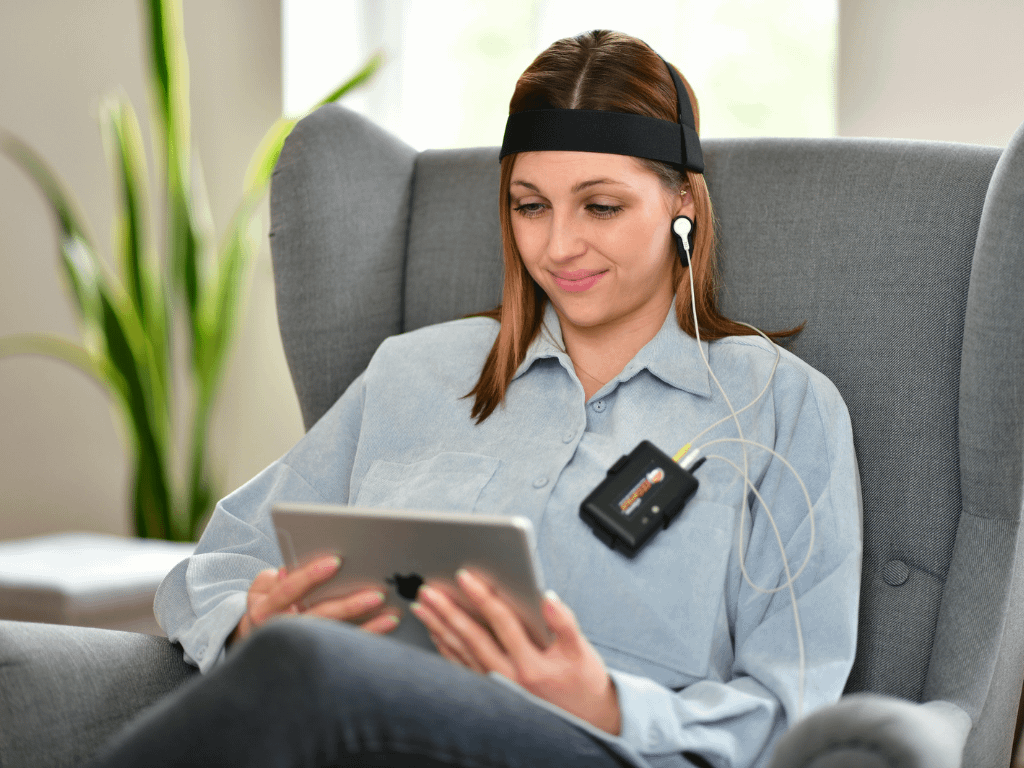
At Holsoms, brain wave training, also called neurofeedback, uses feedback from measured brain activity. The equipment is just one part of the service.
Clinical quality also depends on:
- Appropriate screening.
- Provider qualifications.
- Scope of practice.
- Signal quality.
- Protocol selection.
- Evidence interpretation.
- Symptom and safety monitoring.
- Progress review.
- Care coordination.
- Knowing when it is necessary to refer to other sources.
Two clinics with similar equipment might offer very different assessments and levels of oversight.
- Can you tell me about your professional licence and neurofeedback qualifications?
Ask who will be responsible for:
- The initial assessment.
- Protocol selection.
- Sensor placement.
- Session supervision.
- Progress reviews.
- Side-effect decisions.
- Communication with other clinicians.
Check that person’s qualifications.
Licensure and certification are not the same
A professional license may allow someone to practice medicine, nursing, psychology, counseling, or another regulated field, but it does not mean they have specific training in neurofeedback.
Neurofeedback certification shows that someone has had extra education and mentoring. However, it does not expand their legal scope of practice or replace a required professional license.
Voluntary certification in the field of neurofeedback is provided by the Biofeedback Certification International Alliance. This organisation outlines the educational requirements, the didactic training, the mentoring, the examination, the ethical standards, and the continuing education necessary for the qualification. For more information on the neurofeedback certification requirements of the BCIA, see the review.
Warning signs
Be cautious if the provider:
- Refer to the supervising professional by name.
- Uses unclear phrases such as “brain expert.”
- The idea that certification of equipment establishes the practitioner’s competence.
- It is impossible to say who is responsible for making clinical decisions.
- Carry out activities beyond the scope of their professional license.
- Suggests that a weekend course is equivalent to thorough clinical training.
2. How Do You Decide if I Am a Suitable Candidate?
A clinic should not recommend training just because you have anxiety, trouble concentrating, sleep problems, trauma symptoms, or brain fog.
There could be a number of explanations for those concerns.
A suitability review may include:
- Symptom history.
- History of medical and mental health.
- Current diagnoses.
- Medication.
- Therapy and other treatment.
- Sleep.
- Substance use.
- Seizure history.
- Concussion or brain injury.
- Headaches.
- Bipolar disorder or mania.
- Psychosis.
- Suicidal thoughts.
- Current functioning.
- The patient’s goals.
The provider should also tell you when you need a medical, psychiatric, psychological, sleep, or neurological evaluation before starting.
Warning signs
Be cautious if:
- Everyone is a candidate.
- Before looking over your history, the provider suggests a large package.
- There is no inquiry regarding medication, seizures, sleep, or psychiatric symptoms.
- The clinic does not encourage any medical or psychological assessment.
- Someone attributes serious symptoms to a “brain imbalance” without first conducting an evaluation.
3. What Evidence Is There in Support of This Method with Respect to My Particular Issue?
Do not accept the claim that “neurofeedback is evidence-based” without asking which specific protocol, population, condition, and outcomes the evidence covers.
Relevant questions include:
- Were the studies random?
- Was the comparison genuine or merely pretend?
- Who rated the outcomes?
- Were assessors blinded?
- Did the results affect everyday functioning?
- What was the number of participants?
- Was there a study follow-up?
- Is there an independent replication of the finding?
- Did the clinic use a protocol the same as the one in the studies
The strength of evidence varies depending on the use
More research has been carried out on ADHD than on a great many other clinical issues. In that area, however, the results are mixed.
A systematic review and meta-analysis published in 2025 found that neurofeedback did not seem to offer any significant overall group-level clinical or neuropsychological benefits for ADHD, especially in the case of outcomes that are less susceptible to expectation. You can look up the study on PubMed.
The results of a double-blind, placebo-controlled trial also showed no particular benefit from deliberate theta-beta neurofeedback either at the end of the treatment or at the 13-month follow-up. You can find the randomized trial by looking it up on PubMed.
Some studies and reviews have reported positive results. Because of these mixed findings, medical providers should explain the uncertainty instead of promising specific results.
Warning signs
Be cautious if the provider:
- The research is universally conclusive.
- For each condition it refers to one study.
- Relies primarily on testimonials.
- Assertions that neurofeedback is a cure for a disorder.
- It is not possible to determine the protocol used in the evidence.
- Ignores any research that fails to support the service.
4. What Equipment and Training Method Do You Use?
Ask for the specific:
- Equipment manufacturer.
- Device model.
- Software platform.
- Type of neurofeedback.
- Sensor configuration.
- Training targets.
- Intended use.
- Regulatory status.
Also find out if the system merely records activity or if it delivers stimulation.
Standard EEG neurofeedbackusesf sensors on the scalp to record electrical signals and then givesyour visual or audo feedback. Other brain training technologies may work differently.y.
FDA language requires context
A federal regulation describes a biofeedback device as being an instrument which gives a visual or auditory signal corresponding to the patient’s physiological state. Have a look at the federal definition of a biofeedback device.
A device’s classification or clearance is not the same as FDA approval for treating any condition mentioned in marketing.
Warning signs
Be cautious if:
- The clinic refuses to identify the equipment it uses.
- The provider claims the device is “FDA-approved” without specifying which device.
- The provider claims that the BCIA certified the equipment.
- The provider claims that recording equipment can identify multiple disorders.
- The provider fails to explain in plain language what the sensors do.
5. Are you using qEEG brain mapping, and what exactly can it tell me?
Quantitative EEG involves the application of mathematical analysis to EEG activity which has been recorded. It can show frequency power, asymmetry, statistical relationships, or comparisons with a normative database.
Ask:
- Why is qEEG recommended?
- Who records it?
- Who removes artifacts?
- Who interprets it?
- Is the basic EEG examined?
- Which database is used?
- What impact will the findings have on the plan?
- What is outside the scope of qEEG diagnosis?
- What is the total cost?
qEEG is not a stand-alone diagnosis
A qEEG cannot independently diagnose:
- ADHD.
- Anxiety.
- Depression.
- PTSD.
- Autism.
- Bipolar disorder.
- Insomnia.
- Concussion.
- Traumatic brain injury.
- A learning disability.
It can provide extra information when combined with your symptoms, medical history, medications, sleep patterns, clinical assessment, and other tests.
Warning signs
Be cautious if the provider says:
- This red area is evidence of anxiety.
- “This map confirms ADHD.”
- We can see your pain.
- The scan indicates that there is permanent brain damage.
- The map shows what kind of personality you have.
- A map being normalized means that the condition has been cured.
6. How are you going to personalise and review my training plan?
The term “individualised” should involve more than simply entering your name into software.
Ask how the provider considers:
- Presenting symptoms.
- Clinical history.
- Medication.
- Sleep.
- Age.
- Sensory needs.
- Baseline functioning.
- EEG signal quality.
- qEEG information when applicable.
- Session response.
- Side effects.
- Progress measures.
Find out who is authorised to alter the protocol and ascertain how that decision is recorded.
Research transparency matters
The CRED-nf consensus checklist was developed in order to enhance the design and reporting of neurofeedback research, with a focus on providing clear descriptions of the protocol, indicating neural regulation, showing behavioural outcomes, including control conditions, documenting adverse events, and addressing unsuccessful training. You should review the CRED-nf consensus paper.
Even if a clinic is not a research lab, patients still benefit from clear information about what is being trained and how success is measured.
Warning signs
Be cautious if:
- The same protocol is applied to each patient.
- The provider is unable to explain what is being trained.
- All decisions are made by software without any professional review.
- Changes to the protocol are carried out without any discussion of the symptoms.
- The term “personalized” means merely choosing a condition from a menu.
7. How are you going to tell whether it is having a helpful effect?
A baseline should be set by the provider before the first session.
Progress may be measured through:
- Patient-reported symptoms.
- Validated questionnaires.
- Daily-life functioning.
- Observations made by parents, partners, carers, or teachers.
- Session tolerability.
- Training data.
- EEG measures when relevant.
- Medication and therapy changes.
- Follow-up after training ends.
Inquire about the timing of the formal reviews and what constitutes meaningful improvement.
A brain map is not enough
A change in your qEEG or session score does not always mean you are sleeping better, concentrating more, or functioning better.
Clinical outcomes should be measured separately from EEG changes.
Warning signs
Be cautious if progress has only the following:
- A brain map that is more colorful or more balanced.
- Game scores.
- Session attendance.
- The provider’s general impression.
- Testimonials from other patients.
- Carrying out a set number of sessions.
8. Which Side Effects Do You Keep an Eye On, and What Takes Place If I Feel Worse?
A standard EEG neurofeedback procedure is usually noninvasive, but not everyone has the same experience.
Some patients or practitioners report temporary:
- Headache.
- Fatigue.
- Dizziness.
- Irritability.
- Agitation.
- Anxiety.
- Mental fogginess.
- Concentration changes.
- Sleep disruption.
- Emotional sensitivity.
Research has not determined how often these experiences happen. Still, your provider should clearly explain how symptoms are tracked and managed.
Ask:
- What is the correct way to report symptoms between sessions?
- Who reviews the report?
- What could lead to a pause in the training?
- At what stage would you be in a position to refer me for a medical evaluation?
- What is the way of telling whether something is a side effect or an existing symptom?
- What is the procedure in an emergency?
Warning signs
Be cautious if the provider:
- It states that neurofeedback has no side effects.
- The fact that the condition is getting worse serves as evidence that the brain is recovering.
- Keeps training even though symptoms get much worse.
- Has no way to handle urgent concerns.
- Encourages patients not to get in touch with their doctor or prescribing physician.
9. How will you co-ordinate with my present healthcare providers?
Brain wave training may occur alongside:
- Psychiatric medication management.
- Psychotherapy.
- Primary care.
- Neurology.
- Sleep treatment.
- Concussion rehabilitation.
- Occupational therapy.
- School services.
- Performance coaching.
Ask if the clinic can talk with your doctors, what written permission is needed, and what information will be shared the referring clinician may need:
- The intake summary.
- Goals.
- Training plan.
- Progress measures.
- Side-effect reports.
- The patient’s report regarding changes in medication.
- Discharge or follow-up summary.
Warning signs
Be cautious if:
- The provider maintains that other forms of care are unnecessary.
- It is advised to stop taking the medication without the prescriber’s involvement.
- The clinic is unwilling to provide reasonable clinical coordination.
- The provider promotes the selection of neurofeedback over the necessary medical evaluation.
- Various professionals are regarded as obstacles to brain healing.
10. What is the total cost and what occurs if I don’t make improvements?
Ask for a written estimate that distinguishes:
- Consultation cost.
- Clinical assessment fees.
- qEEG recording and interpretation.
- Individual session cost.
- Package cost.
- Progress-review fees.
- Repeat qEEG costs.
- Follow-up fees.
- Cancellation charges.
- Refund policy.
- Financing or payment plans.
- Which services can be billed to insurance.
- Patients usually expectedpay for se sservicesthemselves.
Also ask:
- Do I have to purchase a package?
- At what time will the first progress review take place?
- Could the plan end prematurely?
- What happens to unused sessions?
- Does the provider automatically recommend booster sessions?
- If I do not make the necessary improvements, what alternatives will you consider?
Warning signs
Be cautious if:
- Pricing is unclear.
- A large package that is not refundable must be obtained at once.
- The provider guarantees success.
- It is always advisable to have more sessions when no progress is being made.
- The written refund and cancellation policies are not available.
- The provider promises insurance coverage without any verification.
Comparing Provider Answers
| Selection area | More reassuring answer | Reason for caution |
| Credentials | Names the supervising professional and provides verifiable credentials | Uses vague titles or equipment credentials |
| Screening | Reviews history, medication, sleep and safety | Describes everyone as a candidate |
| Evidence | Discusses both findings and limitations | Promises proven results for many conditions |
| qEEG | Uses it as supplemental information | Presents it as a stand-alone diagnosis |
| Protocol | Explains what is trained and who reviews it | Relies entirely on software or presets |
| Progress | Measures symptoms and functioning at defined intervals | Uses only maps or session scores |
| Side effects | Has a documented pause and escalation process | Claims no side effects are possible |
| Coordination | Communicates with existing providers with consent | Encourages abandoning other care |
| Cost | Provides written total-cost information | Requires immediate package purchase |
| Lack of benefit | Reassesses, refers or stops when appropriate | Automatically sells additional sessions |
A Simple Clinic-Comparison Scorecard
Score each area from 0 to 2:
- The clinic neither answers nor provides an answer that is concerning.
- 1: The answer is either incomplete or needs to be verified.
- 2: The answer is clear, precise, and backed by written information.
| Area | Score |
| Verifiable qualifications | /2 |
| Appropriate screening | /2 |
| Condition-specific evidence | /2 |
| Equipment transparency | /2 |
| Honest qEEG explanation | /2 |
| Individualized protocol process | /2 |
| Progress measurement | /2 |
| Side-effect response | /2 |
| Care coordination | /2 |
| Cost and exit transparency | /2 |
| Total | /20 |
This score is not a clinical evaluation or a guarantee of quality. It is just a tool to help you compare clinics.
A high score still depends on checking credentials, informed consent, and how comfortable you feel with the provider’s answers.
Reviews Matter but They Are Not Clinical Evidence
Online reviews can help you assess:
- Communication.
- Scheduling.
- Staff courtesy.
- Billing clarity.
- Office experience.
- Whether patients felt listened to.
Reviews cannot reliably establish:
- Clinical effectiveness.
- Diagnostic accuracy.
- Provider competence.
- Long-term outcomes.
- Safety rates.
- Whether the protocol mentioned would be suitable for you.
Testimonials usually share personal experiences and should not replace research or clear clinic outcome data.
Brain wave training at a clinic as opposed to using home devices
| Question | Clinician-guided clinic | Consumer home device |
| Who evaluates suitability? | A professional may conduct clinical screening | Often the user or an automated questionnaire |
| Who selects the protocol? | A trained provider or supervised clinician | Preset software, algorithm or user |
| How are medications considered? | May be reviewed within clinical care | Often minimally addressed |
| Who checks signal quality? | Trained staff may review artifacts and placement | Device instructions or remote support |
| How are symptoms monitored? | May include structured clinical reviews | Often self-monitoring |
| What happens if symptoms worsen? | Provider can pause, reassess or refer | User must identify and seek outside care |
| How is progress defined? | Symptoms, functioning, safety and training data | Frequently proprietary scores or engagement |
| Can care be coordinated? | Possible with patient consent | Usually separate from the care team |
Not all clinics provide good clinical supervision, and not all home devices carry the same risk. It’s important to assess the service itself, not just the setting.
Frequently Asked Questions
What qualifications should a neurofeedback provider have?
Look for a relevant professional license when clinical services are offered, neurofeedback-specific education, supervised mentoring, and clearly defined oversight. BCIA certification is one recognised voluntary credential, but it does not replace licensure or expand scope of practice. Verify each credential with its issuing organization.
Is BCIA-certified equipment a real qualification?
The BCIA certifies qualified individuals, not neurofeedback equipment. Ask about the practitioner’s BCIA certification, professional licence, training, and supervision. Afterwards, ask about the equipment manufacturer, the model name, its intended use, and its regulatory status, rather than treating the device as proof of the clinician’s competence.
Should all neurofeedback clinics carry out qEEG brain mapping?
Not necessarily. Practices and clinical questions differ. If qEEG is recommended, ask why it is relevant, who interprets it, how artefacts are removed, what it will change and what it cannot diagnose. A qEEG should not be presented as a stand-alone diagnosis.
What is the biggest red flag when choosing a neurofeedback clinic?
Guarantees are a major warning sign. Be cautious when a provider promises a cure, permanent results, diagnosis from a brain map, or success after a fixed number of sessions. Responsible providers explain uncertainty, alternatives, costs, side effects and what happens if improvement does not occur.
How can I compare a neurofeedback clinic near me with an at-home device?
Compare screening, professional oversight, protocol selection, signal-quality review, symptom monitoring, care coordination and response to worsening symptoms. A clinic offers potential access to clinical judgment, but that advantage depends on the provider’s actual qualifications and procedures—not simply the physical location.
Bring These Questions to Your Consultation
Schedule a free 15-minute consultation with Holsoms and use these 10 questions to evaluate whether its clinician-guided brain wave training process aligns with your goals, current care, budget and expectations.
A good consultation should help you make an informed decision, not pressure you to buy sessions.
Call (763) 297-3035 or request a consultation through the Holsoms website.