
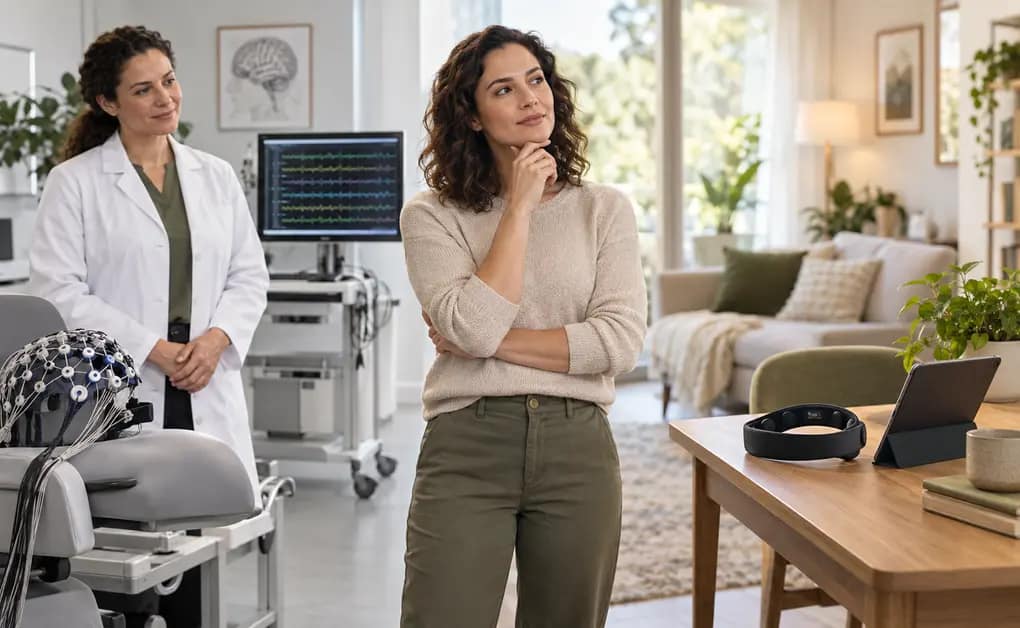
It is quite normal to feel anxious from time to time. But if worry, fear, physical tension, or avoidance have an effect on your work, on your relationships, on your sleep, or on your daily responsibilities, then you might need more than just some general advice on stress management.
This guide covers the main anxiety treatments that don’t involve medication and are available to adults in Dayton, Minnesota, and the surrounding areas. You will learn about therapy, exposure treatments, mindfulness techniques, lifestyle support, and neurofeedback, along with which of these methods have the strongest clinical evidence.
At What Stage Does Anxiety Require Professional Treatment?
Anxiety can have a protective effect since it enables the body to detect possible danger and get ready to react.
The issue is not merely whether or not anxiety exists, but whether the intensity, frequency, and duration of the symptoms are out of proportion to the situation or whether they have an effect on daily life.
The National Institute of Mental Health states that anxiety disorders can have an effect on work, school, relationships, and normal activities. Various anxiety disorders may involve persistent worry, panic attacks, social fear, phobias, or avoidance.
Signs That It May Be Time to Seek Help
Consider speaking with a qualified mental-health professional when anxiety:
- Feels difficult to control
- Frequently disrupts sleep
- Causes persistent muscle tension or physical discomfort
- Interferes with concentration or decision-making
- Leads you to avoid work, travel, or social situations
- Triggers repeated panic attacks
- Affects relationships or job performance
- Causes you to rely on alcohol or other substances
- Continues despite your attempts to manage it
Anxiety symptoms may overlap with those of depression, ADHD, trauma-related conditions, sleep disorders, thyroid problems, the effects of medication, and other health issues, which is why an assessment should be carried out before a treatment is selected.
Is It Possible to Treat Anxiety Without Using Medication?
Yes, it is possible for certain people to cope with an anxiety disorder without taking medication. Psychotherapy and other non-drug treatments may be suitable depending on the diagnosis, the severity of the condition, the patient’s preference, and their previous response to treatment.
Others get the greatest benefit from combining psychotherapy with medication. Therefore, receiving care without the use of medication should not be seen as rejecting medical treatment or as proving that one can overcome anxiety through sheer willpower.
The aim is to select the safest and most suitable form of care, not to adhere to a specific meaning of “natural.”
Cognitive Behavioural Therapy for Anxiety
CBT, which is known as cognitive behavioural therapy, is one of the most well-established psychological treatments for anxiety disorders. It examines how thoughts, emotions, physical sensations, and behaviours reinforce one another.
A therapist can assist the patient in identifying unhelpful predictions, checking their beliefs in a more realistic way, and altering the behaviours that maintain anxiety. The treatment also builds practical skills that patients can apply outside of appointments.
Although CBT is structured, it must still be individualised. The strategies employed for generalised anxiety are different from those used in the case of panic disorder, social anxiety, or a specific phobia.
What CBT May Address
Depending on the person’s symptoms, CBT may include:
- Understanding the anxiety cycle
- Recognizing automatic thoughts
- Evaluating feared predictions
- Reducing reassurance-seeking
- Developing problem-solving skills
- Learning to tolerate uncertainty
- Changing avoidance patterns
- Practising skills between sessions
- Preparing for future symptom recurrence
CBT is not just about positive thinking. It requires learning and then consistently applying new ways to respond to thoughts, sensations, and situations.
Exposure-Based Therapy
Avoiding something often gives immediate relief, but this relief can cause the brain to conclude that the situation that was avoided was dangerous and that it was necessary to escape.
Exposure therapy helps patients face the situations, sensations, or memories they fear in a gradual and organised manner. The aim is not to push them into experiencing extreme distress.
Rather, exposure provides the individual with the chance to learn that anxiety levels can increase and decrease without the need to avoid situations. This approach is especially applicable to panic disorder, phobias, social anxiety, and obsessive-compulsive symptoms.
Arrange exposure sessions based on the person’s diagnosis and tolerance level. Proper clinical training and trauma-informed care are necessary for exposure relating to trauma.
Acceptance-Based Approaches

ACT, which is usually known as Acceptance and Commitment Therapy, aids patients in altering the way they relate to their anxious thoughts and unpleasant feelings. Instead of trying to eliminate all anxious experiences, the individual learns to act in line with their values while making room for discomfort.
ACT may prove useful in cases where efforts to control anxiety have begun to take control of the person’s life. It can address experiential avoidance, self-criticism, and difficulty taking part in meaningful activities.
Accepting something does not involve approving of suffering or abandoning the aim of improving. It means lessening the struggle against one’s internal experiences while still working towards living a meaningful life.
Mindfulness-Based Stress Reduction
Mindfulness teaches people to notice their thoughts, emotions, and physical sensations without immediately responding to them. Structured courses usually include meditation, body awareness, and slow movement.
A randomised clinical trial published in JAMA Psychiatry looked at an eight-week mindfulness-based stress reduction programme and escitalopram in adults who had anxiety disorders. The researchers discovered that the structured mindfulness programme was no less effective than the medication at the primary study endpoint.
This finding does not mean meditation can replace medication for everyone. The study examined an intensive programme led by an instructor that required regular attendance and home practice, not just occasional use of a meditation app.
Mindfulness can also be uncomfortable for certain individuals, especially since concentrating inward may worsen panic, trauma symptoms, or distress. A qualified clinician can help you adapt the practice.
Breathing and Relaxation Training
Anxiety may cause rapid breathing, muscle tension, a quick heartbeat, and heightened awareness of bodily sensations. Breathing and relaxation exercises can help reduce physiological arousal.
Common approaches include:
- Slow, paced breathing
- Progressive muscle relaxation
- Guided imagery
- Grounding exercises
- Applied relaxation
- Sensory orientation
- Brief body scans
These methods are generally most effective when carried out before anxiety has reached its peak intensity. They can help reduce distress, but in some cases, relying on them alone to avoid every anxious sensation might end up reinforcing the fear of that sensation.
A therapist will be able to tell whether a relaxation technique is acting as a useful regulatory skill or is instead taking on the form of avoidance.
Exercise and Physical Activity
Physical activity on a regular basis can help with one’s mood, sleep, and general health. It might even reduce anxiety symptoms in certain people.
Exercise should be regarded as a supportive measure rather than as evidence that anxiety can be overcome by simply trying harder. The right kind of activity will vary according to a person’s health condition, capabilities, interests, and access.
A reasonable approach would be to start with walking, along with strength training, swimming, cycling, yoga, or another type of ongoing physical activity. People who have a medical condition or have been inactive for a long time should obtain professional advice before beginning a new exercise program.
The benefit often comes from consistency rather than intensity. An activity that fits daily life is more valuable than an ambitious routine.
Sleep and Anxiety
Since anxiety can affect one’s ability to get a good night’s sleep, and a lack of sleep can in turn make it harder to regulate emotions and concentrate, tackling sleep problems may constitute an important element of treatment.
Useful steps include sticking to the same wake time, cutting down on caffeine late in the day, assessing alcohol use at night, and establishing a predictable wind-down routine. If insomnia continues, it may be necessary to have specialised treatment rather than just follow general sleep advice.
Cognitive behavioural therapy for insomnia, or CBT-I, is a structured intervention designed for people who have continuous sleep problems. It is not the same as standard sleep-hygiene advice.
If you are snoring, gasping when you are asleep, experiencing severe daytime drowsiness, or having persistent insomnia, you should talk to a healthcare professional.
Caffeine, Alcohol, and Other Substances
Caffeine may cause restlessness, a fast heartbeat, trembling, and trouble sleeping. Different people have very different levels of sensitivity to it.
Although alcohol might produce a temporary sense of relaxation, it can interfere with sleep and increase anxiety when its effects fade. Similarly, recreational drugs and some supplements can make symptoms worse or interact with prescribed medication.
It helps to review substances without judgment, since the goal is to identify modifiable factors and keep treatment safer.
If it is difficult to cut down on alcohol or another drug, it is better to obtain clinical assistance than to try an unsafe withdrawal by yourself.
Regarding Supplements for Anxiety, What Do We Have?
Supplements are often marketed as natural remedies for anxiety. Evidence and product quality vary widely.
Certain products may interact with antidepressants, sedatives, blood thinners, and other drugs. In some cases, they may affect the liver, cause over-sedation, or contain ingredients that differ from those stated on the label.
Patients must let their doctor know about any vitamins, herbs, gummies, sleep aids, and other over-the-counter products. Just because something is described as “natural” does not mean that it is safe, effective, or suitable for use during pregnancy or in combination with medication.
It is wrong to present any supplement as a general substitute for evidence-based anxiety treatment.
Where Neurofeedback May Fit
Neurofeedback is a type of biofeedback that provides immediate information about measured brain activity. In EEG neurofeedback, sensors record electrical activity from the scalp, and visual or auditory feedback responds to certain patterns.
Neurofeedback does not deliver electrical stimulation to the brain. Instead, the participant stays awake and interacts with the feedback as part of the training.
People turn to neurofeedback because they are looking for a drug-free intervention or extra help with emotional regulation, attention, sleep, or stress responses. Yet interest in a particular intervention does not mean it has been proven effective.
What Does the Evidence Show?
Research into the use of neurofeedback for anxiety is still in its early stages. The studies that have been carried out differ in patient groups, anxiety diagnoses, neurofeedback protocols, comparison groups, and outcome measures.
Although some small-scale trials have shown improvements, the total body of evidence is not strong or consistent enough to regard neurofeedback as an established independent treatment for anxiety disorders. It must not be used as a replacement for appropriate psychotherapy or psychiatric evaluation.
Clinical Neurofeedback Versus Consumer Devices
Consumer brain-training apps can offer relaxation exercises, attention games, or feedback based on data from wearable sensors. However, this does not mean that they are the same as neurofeedback provided under professional supervision.
Clinical care must involve an assessment of the symptoms, relevant diagnoses, the patient’s treatment history, health considerations, and goals. The provider should clarify the measurements being taken, why a specific protocol is being considered, and how progress will be evaluated.
Before purchasing a product or beginning training, ask:
- Who decides whether my symptoms indicate an anxiety disorder?
- What specific type of training does the provider have in the area of neurofeedback?
- Does the provider have a licence to treat diagnosed mental health conditions?
- What protocol is suggested, and on what grounds?
- How will changes in symptoms and functioning be measured?
- What will occur if the symptoms get worse or do not improve?
- Can the provider get in touch with my therapist or prescriber?
- How much will the total cost be, and what will the expected time commitment be?
Just because clinical oversight is in place does not mean that it will produce desired results. It does, nonetheless, establish a safer basis for assessment, monitoring, and referral.
Is a qEEG Needed as Part of the Treatment of Anxiety?
A qEEG, which is a quantitative EEG, mathematically examines various aspects of recorded EEG activity. Some providers use this information when considering neurofeedback protocols.
A qEEG alone cannot be used to make a diagnosis of an anxiety disorder. Instead, anxiety is diagnosed based on the presence of clinical symptoms, how long they have lasted, the level of impairment they cause, the individual’s health history, and a proper differential assessment.
Holsoms ought to refer to its neurofeedback as “qEEG-guided” only when qEEG is included in its verified clinical procedure. Otherwise, patients might ask whether brain mapping is used, who interprets it, and how the results would affect treatment.
How to Compare Non-Medication Anxiety Treatment Options
The right choice involves more than whether an intervention does not involve medication.
Consider the following factors:
| Treatment option | Evidence position | What to consider |
| Cognitive behavioral therapy | Strong support for several anxiety disorders | Therapist training, diagnosis, and willingness to practise between sessions |
| Exposure-based therapy | Strong support for relevant anxiety disorders | Clinical expertise, pacing, and type of anxiety |
| ACT and related therapies | Supportive evidence for anxiety and avoidance | Treatment goals and therapist training |
| Structured mindfulness programs | Evidence supports benefit for some patients | Time commitment, instructor quality, and symptom tolerance |
| Exercise and sleep interventions | Useful supportive measures | Health status, sustainability, and underlying sleep conditions |
| Neurofeedback | Emerging and inconsistent evidence | Provider qualifications, protocol, cost, and progress monitoring |
| Consumer brain-training apps | Product-specific and often limited evidence | Privacy, evidence, oversight, and marketing claims |
It might not be possible or appropriate for everyone to choose an option based on stronger evidence. Even if an option seems attractive, it could still be a bad investment if the provider can’t explain the reasons for it or its limitations.
Non-Medication Anxiety Treatment in Dayton, MN
Adults living in Dayton and in the suburbs of the Twin Cities have the option of trying different non-medication anxiety treatments without having to stick to one specific method.
Mental-health care is provided by Holsoms at its clinic located at:
Holsoms TMS Mental Wellness Clinic
13691 Balsam Lane North, Suite C
Dayton, MN 55327
The clinic caters to Dayton, Maple Grove, Rogers, Elk River, Champlin, Osseo, and other nearby communities.
The kinds of care offered consist of psychiatric evaluation, psychotherapy, medication management, and neurofeedback. An initial discussion can help determine whether therapy, lifestyle support, neurofeedback, medication, or a comprehensive plan should be looked into further.
The objective must be to tailor treatment to the individual rather than trying to get each patient to select the same service.
When Anxiety May Be a Medical Emergency
If you are experiencing anxiety along with thoughts of suicide, an inability to stay safe, severe confusion, chest pain, fainting, or any symptoms that could indicate a medical emergency, you should seek immediate professional help.
In the U.S., you should call or text 988 to access the Suicide & Crisis Lifeline. If you need immediate safety or emergency medical help, call 911 or go to the nearest emergency department.
It is not valid simply to suppose that new or severe physical symptoms are the result of anxiety.
Frequently Asked Questions
What Is the Most Effective Form of Anxiety Treatment That Does Not Involve Medication?
There is strong evidence supporting the use of cognitive behavioral therapy and exposure-based treatments for various anxiety disorders. The best method to use will depend on whether the individual has generalised anxiety, panic, social anxiety, a phobia, trauma-related symptoms, or some other condition. Treatment selection should be based on an accurate assessment.
Is It Possible to Treat Severe Anxiety Without Using Medication?
People can improve through psychotherapy and other structured, non-medical interventions. In some cases, combining therapy with medication helps, especially if symptoms are severe or significantly interfere with everyday life.
A clinician should assist in comparing the possible benefits, risks, patient preferences, and past reactions to treatment rather than assuming that one method is appropriate for all.
How Long Does Treatment for Anxiety Not Involving Medication Take?
The timeline varies according to diagnosis, severity, treatment type, attendance, and practice between appointments. Some structured therapies follow a defined course, while complex or coexisting conditions may require longer care.
A provider should explain the initial plan, treatment goals, and when they will review progress.
Is Neurofeedback an Effective Method of Treating Anxiety?
While some small studies have shown promise in the area of neurofeedback for anxiety, the research is still very limited and inconsistent. It would be wrong to regard neurofeedback as a proven treatment on its own or as a replacement for psychotherapy.
Those considering it should get an appropriate evaluation, have realistic expectations, and undergo structured monitoring of their symptoms and daily functioning.
What Place Offers Non-Medication Anxiety Treatment Close to Dayton, Minnesota?
Holsoms Mental Wellness Clinic offers mental health services in Dayton and also caters to surrounding areas such as Maple Grove, Rogers, Elk River, Champlin, and Osseo.
Before deciding which type of care best fits their symptoms and goals, patients can discuss psychotherapy, neurofeedback, and other personalised options.
Take the Next Step
If anxiety is affecting your sleep, work, relationships, or ability to enjoy daily life, begin with a conversation about what you are experiencing—not a commitment to a predetermined treatment.
Schedule a free 15-minute consultation with Holsoms to discuss whether psychotherapy, neurofeedback, or another individualised anxiety treatment option may be appropriate for you.
The consultation allows you to ask questions, understand the available approaches, and decide whether a full assessment is the right next step.