
What is it like to take a brain wave training session?
If you are interested in what neurofeedback feels like, it is entirely natural to have questions about the electrodes, electrical stimulation, or whether you will be required to consciously control your brain. All of these are reasonable questions.
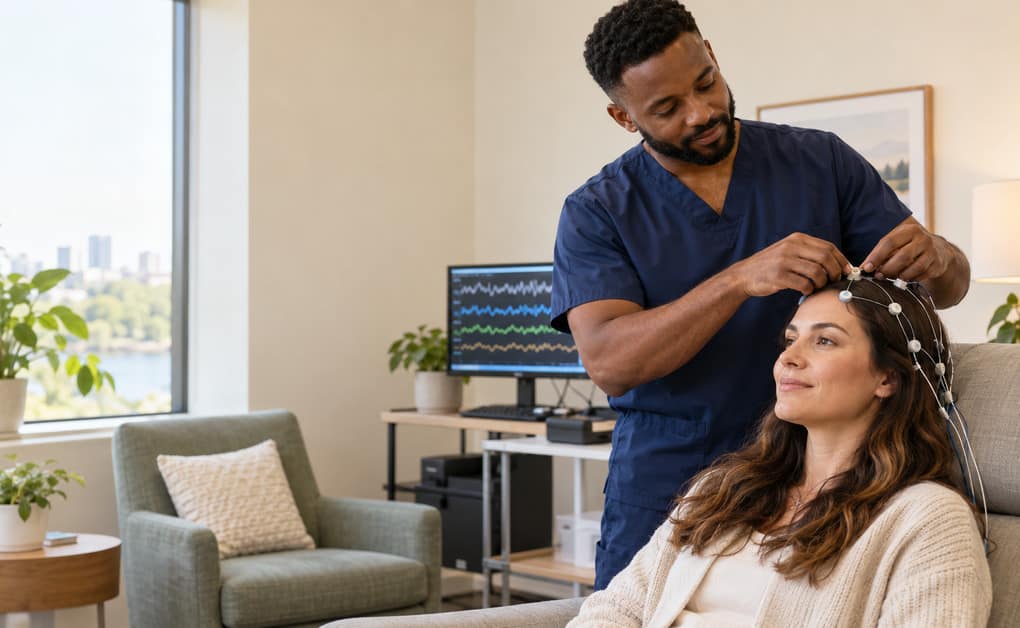
During a conventional EEG-based brain wave training session, sensors record activity from your scalp while visual or audio feedback responds to selected brain wave patterns. You remain awake and able to communicate throughout the appointment. This guide explains what to expect before, during, and after a session, including physical sensations, possible after-effects, and what to know when exploring a neurofeedback session in Dayton, MN.
What Is the Physical Experience of Neurofeedback?
For most people, the physical experience is uneventful. You usually sit in a chair with small sensors placed against specific areas of your scalp. You might notice:
- The provider parting or dividing your hair
- Cool conductive paste or gel applied to your scalp
- Gentle pressure as a sensor is placed
- A clip or sensor placed close to your ear
- A cap or headband, depending on the equipment used
- The feeling of staying still during part of the appointment
The sensors are designed to pick up electrical activity produced by the brain. During a standard EEG recording, they should not cause shocks, vibrations, or magnetic pulses. If a procedure includes stimulation or a noticeable current, ask the provider to explain what technology is being used. Neurofeedback, neurostimulation, and cranial electrotherapy are not interchangeable terms.
Does Neurofeedback Hurt?
Traditional EEG neurofeedback should not cause pain. The most noticeable parts of the process are usually scalp preparation and sensor placement. The conductive paste may feel cool or sticky, and people with sensitive scalps may notice slight pressure during preparation.
Tell the provider immediately if:
- A sensor feels too tight
- Your skin feels irritated
- You develop a headache
- Sitting in the position becomes uncomfortable
- You feel dizzy, nauseated, or more upset than usual
- You need a break
Your comfort matters. You should not feel pressured to continue if you experience significant discomfort.
Does Neurofeedback Send Electricity Into the Brain?
With conventional EEG-based neurofeedback, the answer is no. Sensors on the scalp only pick up electrical activity; they do not transmit electricity into the brain. This is similar to a thermometer measuring temperature without changing it. The sensors receive signals, and software produces feedback based on that information.
Neurofeedback should not be confused with:
- Transcranial magnetic stimulation
- Transcranial direct-current stimulation
- Cranial electrotherapy stimulation
- Electroconvulsive therapy
- Other forms of electrical or magnetic neuromodulation
These methods use different equipment, mechanisms, indications, and safety measures. Because neurofeedback technologies vary, ask your provider to identify the system being used and clarify whether it only records activity or also provides some form of stimulation.
What Happens Before a Brain Wave Training Session?
The initial appointment may feel different from later training sessions. The intake process should include questions about:
- Your current concerns
- Your goals
- Relevant diagnoses
- Medications and supplements
- Sleep patterns
- Neurological and medical history
- Current therapy or psychiatric care
- Previous responses to mental health services
- Factors that may affect EEG recording
- Your expectations for brain wave training
The provider should explain what the service can reasonably provide. You should also have an opportunity to discuss costs, scheduling, and how progress will be assessed.
Will the First Appointment Include Training?
It depends on how the clinic operates. In some cases, training may begin during the first visit; in others, it may not.
Ask Holsoms whether your initial visit will include:
- A consultation only
- A clinical intake
- Sensor placement
- A baseline EEG recording
- An active training period
- A discussion about cost or insurance
How Are the Sensors Positioned?
Scalp locations are selected according to the training method. The skin may be cleaned to improve contact, and conductive paste or gel may then be applied. Sensor placement does not involve needles. The sensors rest on the skin or are held in place with a cap, band, or adhesive material.
The provider may check impedance, which relates to the quality of the connection between the sensor and scalp. A good connection helps reduce unreliable or noisy data. Long or curly hair does not necessarily prevent EEG recording, but preparation may take longer. Patients should feel comfortable asking how the clinic accommodates their hair type, hairstyle, head covering, sensory preferences, or mobility needs.
What Do I Do During a Neurofeedback Session?
During a session, you may be asked to watch a screen, listen to audio, or participate in a simple game-like activity. The feedback changes according to selected features of the recorded EEG signal. For example:
- A film may become clearer
- The screen may become brighter
- Music may continue or become softer
- A tone may sound
- An animation may move
- A game element may respond
You usually do not need to force the feedback to change. The method relies on repeated exposure to real-time information rather than solving a puzzle or deliberately producing a particular brain wave. The provider may ask you to stay as still as possible because blinking, jaw tension, facial movement, and muscle activity can interfere with the EEG signal.
Will I Be Awake and in Control?
Yes. Brain wave training does not use anaesthesia, hypnosis, or sedation. You remain awake and able to:
- Speak with the provider
- Ask questions
- Request adjustments
- Pause the activity
- Take breaks
- End the session
The computer cannot read your thoughts or reveal the contents of your memories. EEG measures patterns of electrical activity; it does not translate private thoughts into words or images.
How Does the Feedback Feel?
The feedback is generally something you see or hear and does not create a clear physical sensation. People describe the experience as:
- Calm
- Interesting
- Mentally engaging
- Repetitive
- Relaxing
- Slightly tiring
- Unusual at first, similar to quietly watching a screen
Some people may not notice an obvious difference during the appointment. A neutral experience does not mean the session has failed, just as immediate relaxation does not prove that the training is effective. Neurofeedback research should assess changes systematically rather than relying only on how a person feels in the moment.
What Might I Think About During Training?
Your mind may drift during the session. You might wonder whether you are “doing it right,” notice changes on the screen, or become distracted by sounds in the room. You generally do not need to clear your mind. Neurofeedback is not meditation, although parts of the experience may feel meditative.
If you feel anxious about performing well, tell the provider. Clear instructions can reduce the pressure to produce a particular result. The provider should explain:
- Whether you should use a strategy
- Whether you should simply watch or listen
- What the feedback changes mean
- When the signal is affected by movement or speech
- How to request a break
What Happens If I Move, Blink, or Speak?
Normal movement can affect an EEG recording. Signals caused by eye movements, facial muscle contractions, jaw tension, and body movement can create artefacts that interfere with the activity being measured. The provider may ask you to:
- Relax your forehead or jaw
- Reduce unnecessary movement
- Reposition your head
- Pause while a sensor is checked
- Avoid talking during active training
- Move your eyes normally while avoiding dramatic eye movements
An artefact is a technical issue, not a sign that something is wrong with your brain. Professional monitoring helps distinguish usable EEG data from movement or poor sensor contact.
How Long Does a Brain Wave Training Session Last?
Session length varies according to the provider, equipment, participant, and stage of the program. A complete appointment may include:
- A brief check-in
- Sensor preparation
- Signal-quality checks
- Active brain wave training
- Sensor removal and cleanup
- A discussion of how you felt during the session
The feedback phase may be shorter than the complete appointment.
Holsoms clinical-team input required: Enter the clinic’s confirmed appointment duration, the usual amount of time spent on active training, and the recommended arrival instructions. Publish a standard session length only after Holsoms has verified its actual workflow.
How Does Neurofeedback Feel Afterwards?
The effects of brain wave training differ from person to person. Some people report feeling:
- Relaxed
- Calm
- Alert
- Focused
- Sleepy
- Mentally tired
- Emotionally sensitive
- No different from before the session
These experiences are personal and do not mean that brain wave training has produced lasting benefits.
The consensus from the CRED-nf paper published in Brain states that neurofeedback studies should collect data about acceptability, safety, and adverse effects. This matters because adverse effects have been reported inconsistently in the research literature.
Could There Be Side Effects?
Neurofeedback is generally regarded as noninvasive, but unwanted effects can occur. Effects reported or discussed in clinical contexts may include:
- Temporary fatigue
- Headaches
- Irritability
- Restlessness
- Sleep changes
- Difficulty concentrating
- Feeling overstimulated
- Changes in mood or emotional sensitivity
Not everyone experiences these effects. It remains difficult to estimate how common they are or how they relate to training because many studies have not reported adverse effects consistently.
Tell your provider about changes you experience during or after a session. Feeling worse should not be treated as a necessary sign that your brain is “healing” or that the training is working.
When Should I Seek Medical Advice?
If you notice concerning or persistent changes after training, consult an appropriate healthcare professional. Seek help if you experience:
- Suicidal thoughts
- Severe agitation or behavioural changes
- A seizure
- Loss of consciousness
- Sudden weakness or numbness
- Severe confusion
- A sudden, severe headache
- Any acute neurological or psychiatric concern
Brain wave training is not emergency care. If you take prescribed medication, do not stop or change it because of how you feel after a session. Discuss medication decisions with your prescribing professional.
Can I Drive or Return to Work After a Session?
Many people can return to their usual activities after an appointment, but individual responses vary. If you feel drowsy, dizzy, mentally unclear, or unusually distracted, do not drive or perform safety-sensitive tasks until you are confident that you can do so safely.
Consider leaving some flexibility after your first visit so you can assess how you feel without pressure to complete demanding activities. Ask the clinic whether it has specific post-session recommendations based on the equipment and procedures it uses.
How Should I Prepare for a Neurofeedback Session?
Unless the clinic provides different instructions, practical preparation may include:
- Sleeping as normally as possible
- Eating according to your usual routine
- Staying reasonably hydrated
- Taking prescribed medication as directed
- Avoiding sudden changes in caffeine consumption
- Telling the provider about alcohol or substance use
- Bringing an updated medication list
- Asking whether hair products can interfere with sensors
- Wearing comfortable clothing
- Arriving with time to ask questions
Do not omit medication, food, or caffeine solely to alter your EEG recording unless a qualified clinician specifically instructs you to do so.
What About Hair Products?
Some heavy styling products or hair treatments may affect sensor contact. The clinic should provide clear instructions before your appointment. Ask whether you need to:
- Wash your hair beforehand
- Avoid oils, gels, or sprays
- Remove hair extensions or accessories
- Expect paste or gel to remain in your hair afterwards
- Bring a comb, scarf, or hat for the trip home
Holsoms clinical-team input required: Confirm the preparation instructions for the clinic’s equipment before adopting this guidance as clinic policy.
What Should I Bring to the First Appointment?
Consider bringing:
- Photo identification
- Insurance information, if applicable
- A current list of medications and supplements
- Relevant provider contact information
- Notes about your symptoms and goals
- Questions about the training process
- Information about neurological conditions or previous head injuries
- A list of current mental health or medical services
If the appointment is for a minor or a dependent adult, ask which consent forms and caregiver details are required.
May I Use My Phone During Training?
Using a phone during active training may be distracting and could affect the feedback or recording. The clinic may ask you to turn off or put away your phone during the active part of the session. You should still be able to access it before or after training.
Ask whether a caregiver may remain in the room and whether the clinic permits photographs or recordings, as privacy rules may restrict recording in clinical areas.
Is the Session Confidential?
When neurofeedback is provided in a healthcare setting, it should follow the clinic’s privacy and record-keeping policies. Ask:
- What EEG information is stored
- Whether raw data is retained
- Who can access your records
- Whether third-party software processes data
- Whether information leaves the clinic’s system
- How records may be shared with other providers
- Whether separate consent is required to share information
The 2020 CRED-nf consensus recommends defining clinically meaningful outcomes in advance and assessing whether participants successfully regulated the intended feedback signal.
Ask when formal progress reviews will occur and what would lead to the training plan being changed or discontinued.
Will I Notice a Difference After the First Session?
You may notice a temporary change, or you may notice no change at all. Neither response reliably predicts the final result.
Immediate experiences may be influenced by:
- Expectations
- The calm clinic environment
- A break from daily stress
- Focusing on a screen
- Fatigue
- Changes in routine
- Interaction with the provider
- The training itself
A responsible provider should not treat one positive session as evidence that an entire program will be effective. Progress should be assessed over time using agreed goals and relevant measures.
What Is the Difference Between Clinician-Guided Training and an App?
Many consumer brain-training apps use puzzles, meditation exercises, or attention games without recording EEG activity. Some home devices record a limited amount of EEG data, but professional supervision, sensor quality, customisation, and progress monitoring vary.
Clinician-guided brain wave training may include:
- Professional screening
- Supervised sensor placement
- Signal-quality checks
- Individualised training decisions
- Monitoring for unwanted effects
- Documented progress reviews
- Coordination with other care providers
The fact that a clinical service costs more does not guarantee that it is effective. Ask what expertise and services are included.
What Qualifications Should I Ask About?
The Biofeedback Certification International Alliance offers a certification pathway in neurofeedback. Entry-level certification requirements include relevant education, neurofeedback training, practical mentoring, reviewed sessions, case presentations, and an examination. BCIA certification applies to people, not equipment.
Ask the provider:
- Who conducts the training?
- Who supervises the sessions?
- What qualifications do they have?
- Do they currently hold BCIA certification?
- How was their training verified?
- How do they respond to unwanted effects?
- When do they refer someone for medical evaluation?
What Should I Ask Before Scheduling?
Before agreeing to a program, ask:
- Does the provider explain the conventional EEG neurofeedback technology being used?
- Does the equipment only record activity, or does it also provide stimulation?
- What happens during the first appointment?
- How long is the full appointment?
- What physical sensations can I expect?
- How are the sensors attached and removed?
- How should I prepare my hair?
- How are unwanted effects monitored?
- What should I report after a session?
- How will progress be measured?
- When will the plan be reviewed?
- What is the total expected cost?
- Does insurance cover the service?
- What qualifications does the provider have?
- Can the provider coordinate with my current care team?
Clear answers can reduce uncertainty and help you decide whether the service seems suitable.
What to Expect From a Neurofeedback Session in Dayton, MN
Holsoms serves Dayton and nearby Minnesota communities from its clinic at:
Holsoms TMS Mental Wellness Clinic
13691 Balsam Lane North, Suite C
Dayton, MN 55327
The clinic serves people from Dayton, Maple Grove, Rogers, Champlin, Osseo, Elk River, and other Twin Cities communities.
Frequently Asked Questions
Does neurofeedback hurt?
Traditional EEG neurofeedback should not cause pain. You may notice cool or sticky conductive paste, gentle pressure during sensor placement, or mild discomfort from remaining in one position. Tell the provider immediately if you experience pain, skin irritation, a headache, dizziness, or another concerning sensation.
Does neurofeedback send electricity into the brain?
Traditional EEG neurofeedback sensors pick up electrical activity produced by the brain; they do not supply electricity to it. Neurofeedback differs from electrical and magnetic stimulation techniques. Ask the provider to identify the equipment and clarify whether the system only records activity or also involves stimulation.
How do people feel after a neurofeedback session?
Some people report feeling relaxed, focused, alert, sleepy, or mentally tired. Others notice no immediate change. Experiences vary, and a temporary sensation does not show that training is effective. Report persistent headaches, irritability, sleep disturbances, or other unexpected changes to the provider.
How long does a neurofeedback session last?
Appointment length depends on the clinic and the type of training offered. Time may be needed for check-in, sensor placement, signal-quality checks, active training, cleanup, and a post-session discussion. Ask Holsoms for its verified appointment length and how much time is spent on active brain wave training.
Where can I book a neurofeedback session in Dayton, MN?
Holsoms TMS Mental Wellness Clinic is located at 13691 Balsam Lane North, Suite C, Dayton, Minnesota. A free introductory consultation can help you understand the session process, physical sensations, preparation instructions, costs, and whether clinician-guided brain wave training may align with your goals.
Take the Next Step
Knowing what happens during an appointment can make a first visit feel more manageable.
Schedule a free 15-minute consultation with Holsoms to learn what clinician-guided brain wave training feels like and what to expect during your first session.
Use the consultation to ask about sensor placement, appointment length, equipment, preparation, possible side effects, professional supervision, costs, and progress monitoring.
Medical note: This article provides general educational information and should not be considered medical advice, a diagnosis, or a personalized recommendation.